Pay for Success aligns funding with outcomes to transform how communities solve complex challenges.
Anchorage faces a costly and ineffective cycle: individuals experiencing homelessness for a long time repeatedly move between shelters, emergency services, and correctional facilities without achieving long-term housing stability. A relatively small group of high-need individuals drives a disproportionate share of emergency service system use. Despite receiving services, they weren’t achieving housing stability. Why?
United Way of Anchorage wanted to identify a better approach to generate housing stability for our most vulnerable adult community members. When we learned about the pay-for-success model, we decided to test its framework. Knowing it ties investments directly to measurable outcomes, after a feasibility study and pilot program, we launched Home for Good. Would this approach help Anchorage tackle long-term homelessness? It did.
Pay for Success shifts investment toward solutions that deliver measurable results for people and systems.
Outcome-Based Payments
Pay for Success brings together government, service providers, and funders to address complex social challenges. Upfront funding, often from philanthropic or private sources, supports program delivery. As participants receive services, outcomes are tracked. With Home for Good, months of housing stability and reduced use of emergency service systems are reviewed. Payments are made when agreed-upon outcomes are achieved, reducing financial risk and ensuring accountability.
Feasibility Estimations
The Pay for Success Feasibility Study that United Way commissioned in 2016 produced important findings. It showed supportive housing could significantly reduce people’s reliance on high-cost services. Even though permanent supportive housing requires significant investment, it results in better outcomes because participants receive individualized support. This model links measurable outcomes, tracked over time, with payments to the organization operating the program.
Anchorage Demonstration
United Way developed Home for Good to test the pay-for-success model in Anchorage. We launched it in 2020 to implement and evaluate the model over five years. Home for Good combines permanent supportive housing with intensive case management. Program participants have experienced homelessness for a long time and frequently use emergency service systems. They receive robust, wrap-around services tailored to their needs so they can achieve housing stability.
Coordinated-Systems Approach
Our contract required alignment across sectors, and Home for Good’s structure reflected that coordination. Working with Municipality of Anchorage, Social Finance, Inc., service providers, health care partners, and philanthropic funders, we designed and ran Home for Good. Together, we created a network focused on results rather than fragmented efforts. From funding and program management to service delivery and outcome measurement, each partner played a role.
Built-In Sustainability
Home for Good, using Pay for Success, demonstrates that Anchorage can achieve better outcomes without increasing overall system costs. By reducing reliance on emergency service systems and increasing access to stable housing and care, resources are used effectively. Home for Good shows this model works in Anchorage. Furthermore, it provides a foundation for expanding Pay for Success strategies to address homelessness and other complex challenges across Alaska.
Proven Results
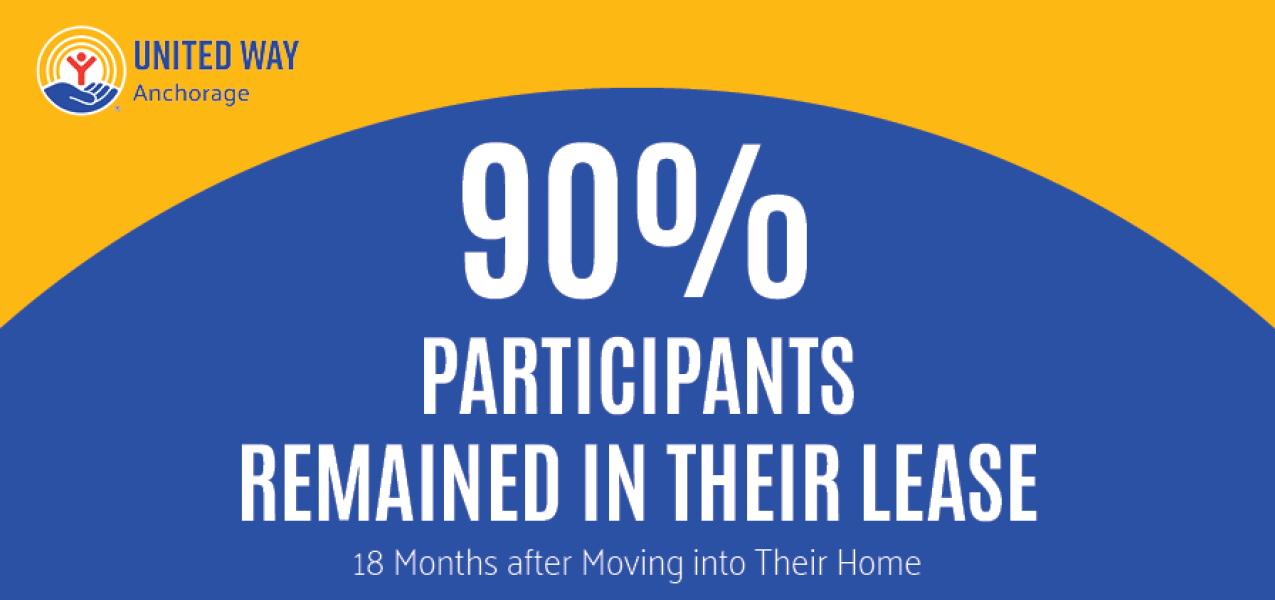
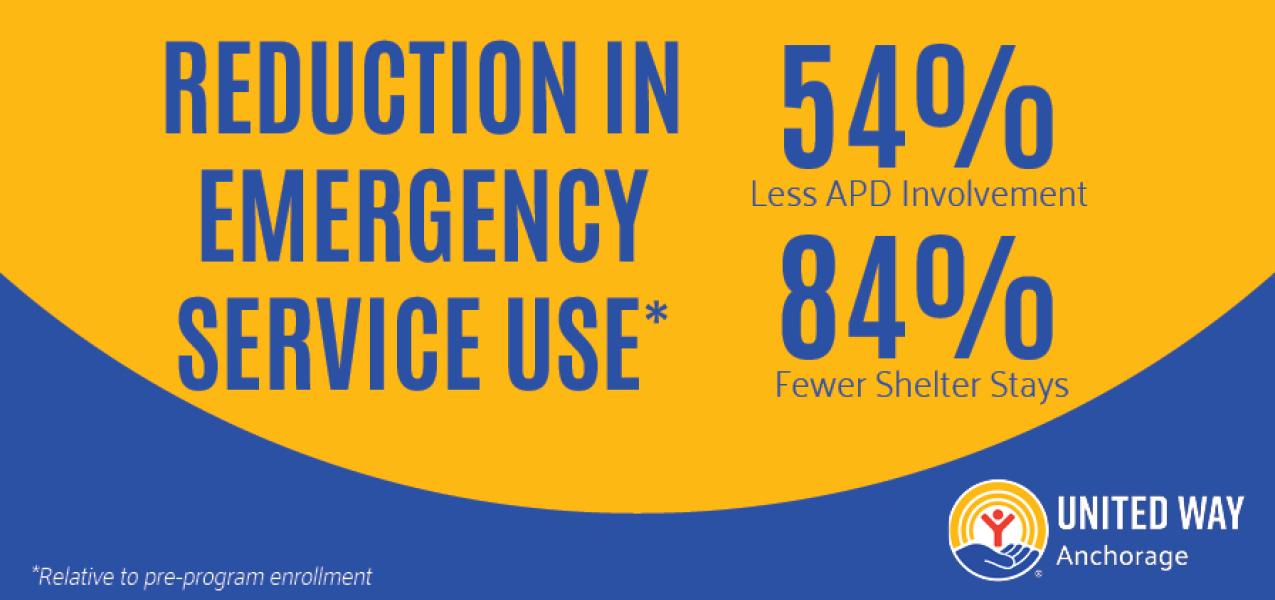
Home for Good proved that Pay for Success can deliver meaningful outcomes. Participants remained housed more than 90% of the time across 6, 12, and 18 months. Most stayed consistently engaged in supportive services, and many required few or no housing moves. Overall, their use of emergency service systems declined, including reductions in shelter stays, arrests, emergency medical transport, and safety center utilization. It’s exciting to see these Alaskans find hope.
Pay for Success outcomes demonstrate that supportive housing paired with intensive case management interrupts cycles of crisis and creates lasting change.
Learn more about United Way's impact areas, initiatives, partnerships, and programs!